
Company · Apr 13, 2026 · 2 min read
LinkedIn vs. AI: Which Is Most Effective at Finding Potential Customers?
By Soca AI

In the world of B2B sales, finding potential customers is not just about gathering as many leads as possible. The real challenge lies in finding the right prospects, understanding their needs, and determining who holds the highest potential to become a customer.
Historically, LinkedIn has been one of the primary tools for sales prospecting. Sales teams can search for companies, find decision-makers, view job titles, and build direct connections.
However, today, Artificial Intelligence (AI) is beginning to transform how sales professionals discover and understand prospective customers.
So, LinkedIn vs. AI: which is more effective?
LinkedIn: Excels in Networking
LinkedIn holds a distinct advantage as a professional networking platform. Sales reps can search for prospects based on:
Job title
Company
Industry
Location
Work experience
Professional network
For example, when looking to sell AI solutions to a manufacturing company, sales reps can search for the CTO, IT Director, Head of Digital Transformation, or other key decision-makers.
However, finding a profile is merely the first step.
Sales reps still need to conduct manual research to determine whether the company genuinely has a relevant need.
AI: Excels in Sales Intelligence
AI takes the prospecting process to the next level.
Beyond just helping discover leads, AI can assist in conducting company research, market research, competitor analysis, lead scoring, and identifying buying signals.
For instance, AI can help identify that a company is:
Currently expanding
Opening multiple tech roles
Undergoing digital transformation
Having specific needs based on its industry
Showing indications of needing a particular solution
As a result, sales professionals not only know whom to contact, but also why that prospect is worth contacting.
LinkedIn and AI Are Not Meant to Replace Each Other
In reality, LinkedIn and AI serve distinct roles.
LinkedIn helps discover and build connections with prospects.
AI helps understand and analyze prospects.
Sales reps build relationships and turn insights into meaningful conversations.
Together, all three form a more effective prospecting workflow. Sales teams can use LinkedIn to find target accounts and decision-makers, then leverage AI to perform research, detect buying signals, and prioritize leads.
This way, sales reps do not have to spend excessive time on repetitive research tasks and can focus more on high-potential prospects.
From "Many Leads" to "The Right Leads"
The advancement of AI is shifting how organizations approach lead generation.
It is no longer:
"How many leads can we get?"
Instead, it is:
"Of all the available leads, which ones are most likely to become customers?"
This is precisely the role of AI Sales Intelligence: helping sales teams find, understand, and prioritize prospects based on data and actionable insights.
Conclusion
LinkedIn is not being replaced by AI. Rather, both complement each other.
LinkedIn helps sales identify who the prospective customers are, while AI helps answer why they hold potential and how best to approach them.
Ultimately, the most effective sales reps are not those with the highest volume of leads, but those who can reach the right prospects at the right time with the right approach.
More articles
Company · Aug 4, 2026
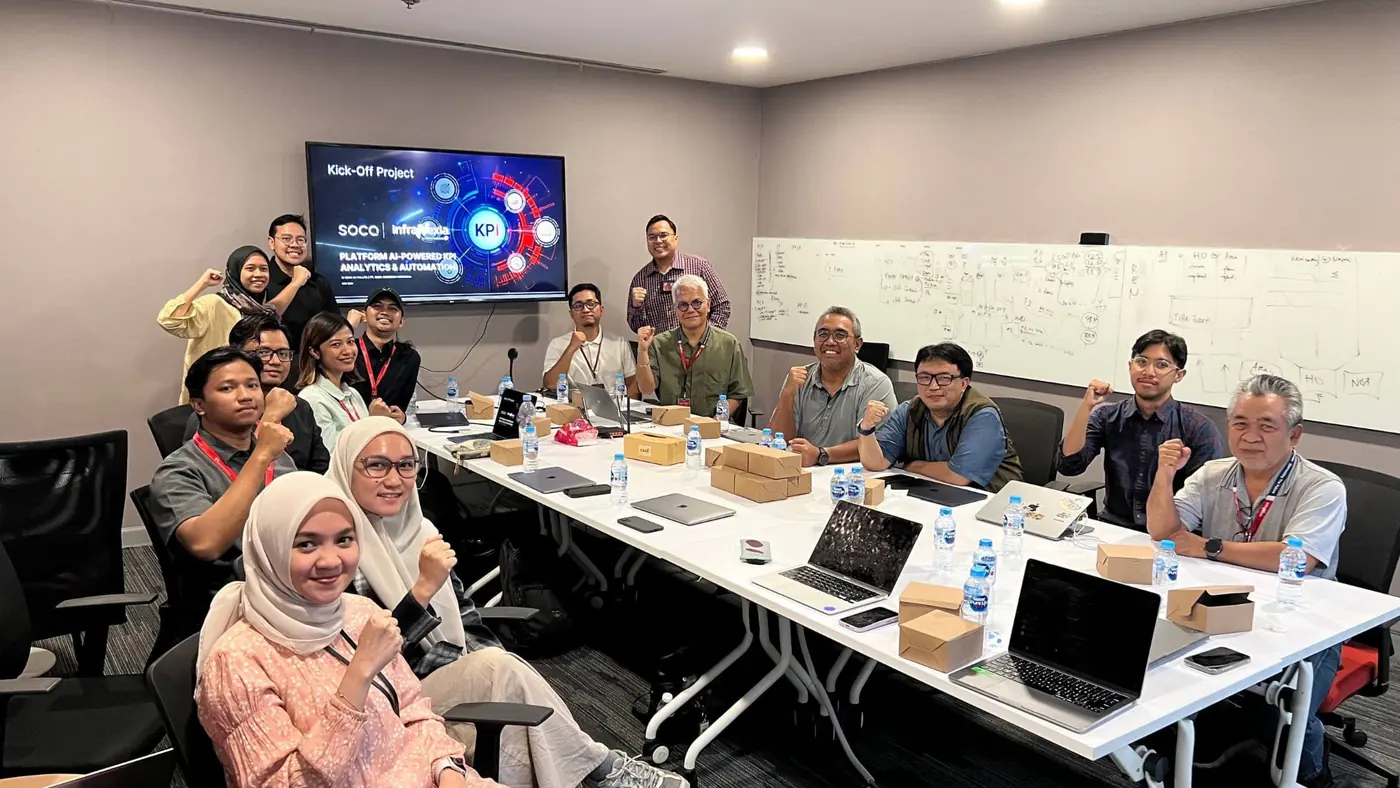
Kick Off AI Project for Infranexia
Soca AI is deploying an AI-powered KPI analytics and automation solution for Infranexia to transform performance management for over 100 strategic KPIs.
2 min read

Company · Apr 28, 2026
Best B2B Lead Generation & Sales Automation Platform in Indonesia
Discover how AI helps companies find B2B leads with greater precision and automate the sales process from outreach to prospect qualification. Learn how Soca AI helps sales teams save time and increase sales process efficiency.
2 min read

Company · Apr 27, 2026
Enterprise AI On-Premise for Business Data Security
Learn how Enterprise AI On-Premise helps enterprises maintain data security, mitigate the risk of information leaks, and build more secure AI systems in Indonesia's business environment.
3 min read